
Choosing the repeat.
The structure of a repeat decides how a pattern moves across a surface. These four are the most common; a single design can be tested in more than one before it is finalised.
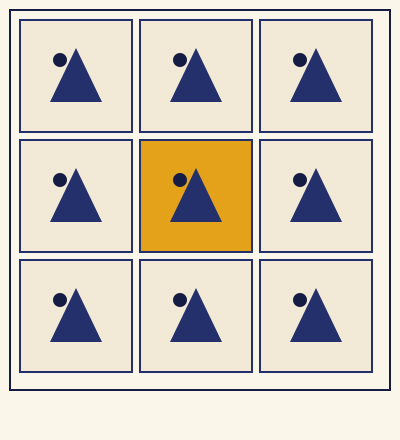
Block
Tiles align in a straight grid. Clear and calm; strong for geometrics and checks, but it can reveal the grid in loose florals.
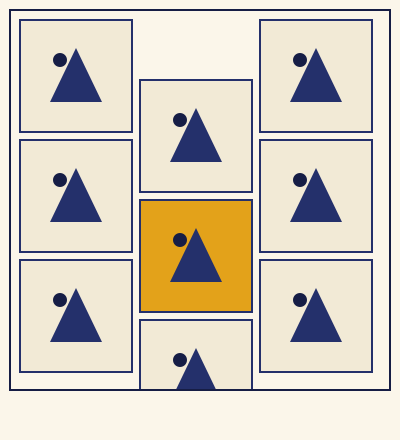
Half-drop
Each second column drops by half the tile height. It breaks vertical lines and is widely used for florals and fruit motifs.
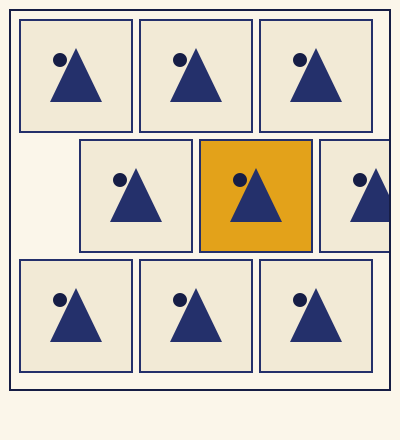
Brick
Each second row shifts sideways by half a tile. It spreads the motif across the width, useful for borders and horizontal rhythm.
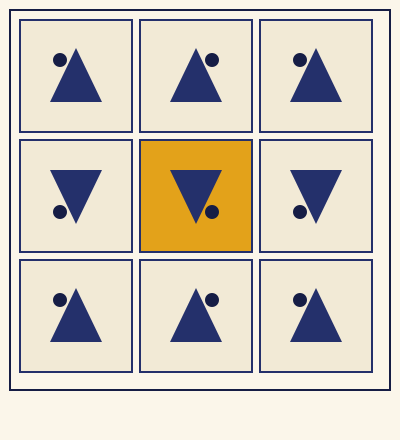
Mirror
Neighbouring tiles are flipped. Symmetry produces larger shapes and suits damask-like and tile-like designs.
Diagrams · the highlighted tile is the one that is drawn; the others are copies placed by the repeat
Repeat size
The repeat size is the height and width of one tile before it starts again. It is limited by the print method: rotary screens have a fixed circumference, flat screens a fixed frame, and digital printing allows larger tiles but still benefits from a defined size. Wallcovering repeats also relate to roll width.
A small repeat shows the motif many times across a garment; a large one lets a single motif dominate a curtain. Knowing the method and the product first saves redrawing later.
What to send for a repeat
- The product and how the fabric will be cut and used
- Print method, if already chosen, and printable width
- Required repeat size, or the printer's limits
- Motifs, references or a mood you want to start from
- Number of colours allowed, if screen printing